
'A soft landing of the Indian economy would be a long-term positive for the equity markets.'

After his wide-ranging talks with Modi on the second and final day of his India visit, Johnson said the new defence and security partnership will enable India to strengthen its domestic defence industry as well as help the two countries protect vital shared interests in the Indo-Pacific.

Undeterred by the stock market volatility, uncertainty due to the Ukraine-Russia war and high inflation, equity mutual funds continue to remain attractive choice for investors for the 15th straight month, registering a net inflow of Rs 18,529 crore in May on robust SIP numbers. This was higher than Rs 15,890 crore net inflow in April, data from the Association of Mutual Funds in India (AMFI) showed on Thursday. Equity schemes have been witnessing net inflow since March 2021, highlighting the positive sentiment among investors.
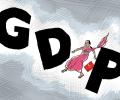
India's economy is expected to grow 7.5-8 per cent this fiscal year with exports playing a key role in the country's success story, CII president TV Narendran said on Monday. However, he said the country needs to remain prepared for any fallout of next wave of COVID-19 pandemic, and the impact of the ongoing Russia-Ukraine war. "We are confident that the economy can retain a high growth trajectory this year. "So, we are very optimistic on the export front. "Exports will be a key component of India's success story going forward," Narendran said.

Petrol and diesel prices were on Tuesday hiked by 80 paise a litre while domestic cooking gas prices were increased by Rs 50 per cylinder, ending an over four-and-half month election-related hiatus in rate revision, sources said. Petrol in Delhi will now cost Rs 96.21 per litre as against Rs 95.41 previously while diesel has gone up from Rs 86.67 per litre to Rs 87.47. Simultaneously, the price of a non-subsidised LPG cylinder has been increased to Rs 949.50 for each 14.2-kg bottle in the national capital.

The fault line between the West and Russia has widened into a deep chasm and this is likely to endure in the foreseeable future. Far from forcing its way into the European tent, Russia may be reduced to the status of an even more sullen and weakened bystander on its periphery. The US appears to have won this hand with little cost to itself, observes former foreign secretary Shyam Saran.

SBI Research has projected the Indian economy to grow at 7.5 per cent in 2022-23, an upward revision of 20 basis points from its earlier estimate. As per official data, the economy grew by 8.7 per cent in FY22, net adding Rs 11.8 lakh crore in the year to Rs 147 lakh crore, the report said, adding this was however only 1.5 per cent higher than the pre-pandemic year of FY20. "Given the high inflation and the subsequent upcoming rate hikes, we believe that real GDP will incrementally increase by Rs 11.1 lakh crore in FY23. "This still translates into a real GDP growth of 7.5 per cent for FY23, up by 20 basis points over our previous forecast," SBI chief economist Soumyakanti Ghosh said in a note on Thursday.

'At current valuations, we believe large-caps offer better downside support.' 'Hence, we are suggesting a small tilt towards them.'
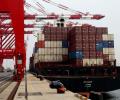
Imports too contracted by 28.72 per cent to $31.16 billion. Dip in exports and imports narrowed the trade deficit -- the difference between imports and exports -- in March to $9.76 billion, the lowest in the last 13 months.

India's growth projection released by the latest World Economic Outlook remains unchanged from its previous WEO (World Economic Outlook) update of July this summer but is a three-percentage point in 2021 and 1.6 percentage point drop from its April projections. According to the latest WEO update, released ahead of the annual meeting of the IMF and the World Bank, the world is expected to grow at 5.9 per cent in 2021 and 4.9 per cent in 2022.

Developing more sources of supplies to guard against disruptions may emerge as the next big trend. But that may not necessarily mean flow of more investments into India, unless investors are assured, besides important economic factors and impartiality of institutions, that social disharmony will not cause unexpected disruptions.

Addressing the members of the House, Singh said agriculture is a state subject but the Centre ignored it. "I find it very strange what the government of India wants to do," he said.

Apart from supply chain disruptions, Moody's also expects consumption and investment to be affected and prices of oil and other commodities to remain around current lows until the end of June.

The central government has asked public sector undertakings to dissuade their employees from participating in the bandh.

Markets

The Samyukta Kisan Morcha (SKM), a forum comprising 40 farmer unions, called for a Bharat Bandh on Monday against the Centre's three agriculture laws. Here is its impact across the country:

'The availability of vegetables has gone down due to fewer arrivals in wholesale mandis. Their supply was disrupted because of low yields and high spoilage,' says Shyam Bhimraoji Karlekar, chairman, APMC Wardha, one of the largest sellers of vegetables in Maharashtra.
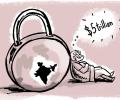
India is much better placed today to deal with future waves of the pandemic relative to the first wave, RBI deputy governor Michael Patra said.
India will need $8 trillion (around Rs 588 lakh crore) of gross capital formation or new greenfield assets to become a $5 trillion (around Rs 368 lakh crore) economy by FY2027, a report said. The report by Deloitte said despite the COVID-19 disruption, FDI inflow into the country provides necessary optimism and display underlying strengths of the Indian economy. In FY2020-21, FDI inflows (including equity, re-invested earnings, and capital) amounted to a record $81.72 billion, 10 per cent higher than the previous financial year, it said.

CNG price in the national capital and adjoining cities on Tuesday was hiked by Rs 0.50 per kg, while an imminent increase in petrol and diesel price has been put on wait-and-watch mode for more clarity on global oil prices. CNG price in NCT of Delhi has been increased to Rs 57.51 per kg from Rs 56.51, according to the information posted on the website of Indraprastha Gas Ltd - the firm which retails CNG and piped cooking gas in the national capital. Following the firming up of international gas rates, IGL has been raising CNG rates by up to 50 paise (Rs 0.50) per kg periodically. Prices have gone up by about Rs 4 per kg this year alone.
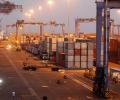
Developed countries are relaxing restrictions on economic activity at a faster rate than expected. Global demand for consumer goods, intermediates and commodities is growing at a fast pace. Most exporters are flushed with orders, says T N C Rajagopalan.

Telecom regulator TRAI on Tuesday suspended the newly-implemented norms for commercial text messages for one week, following major disruptions in SMS and OTP deliveries for banking, payment, and other transactions.

Prime Minister Modi, who is in Japan on a two-day visit to attend a summit of the Quad leaders at the invitation of his Japanese counterpart Fumio Kishida, penned an op-ed on the vibrant relations between India and Japan in the Yomiuri Shimbun.

India's GDP growth for the current fiscal is expected to slow down to 4.8 per cent, a UN report has said, warning that the Covid-19 pandemic is expected to result in significant adverse economic impacts globally. The UN 'Economic and Social Survey of Asia and the Pacific (ESCAP) 2020: Towards sustainable economies' said that Covid-19 is having far-reaching economic and social consequences for the region, with strong cross-border spillover effects through trade, tourism and financial linkages.

Gold demand in India dropped by 30 per cent during the July-September quarter to 86.6 tonnes, compared to the same period last year due to Covid-19 related disruptions and ruling high prices, the World Gold Council (WGC) said in a report.

The objective is to ensure the exchange's preparedness in the event of a natural calamity, so that any disruptions should not affect market integrity and investor confidence.

So, while it is great that India's numbers look relatively good, don't raise a cheer just yet, points out T N Ninan.

Infosys will ring the closing bell at the New York Stock Exchange (NYSE) on Friday to commemorate its eighth anniversary of listing on the exchange. Infosys CEO Salil Parekh will ring the closing bell in a ceremony to celebrate the company's 2020 achievements, including its eight years of trading on the NYSE, rapid growth in the US, and its recently announced Environmental, Social and Governance (ESG) Vision for 2030, a regulatory filing said.

China on Monday continued its unprecedented military drills around Taiwan, extending the schedule of war games launched in retaliation to the visit by US House Speaker Nancy Pelosi to the breakaway island which Beijing claims is part of its territory.
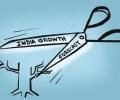
The International Monetary Fund (IMF), in its latest World Economic Outlook report, has slashed its forecast for India's FY23 gross domestic product growth to 8.2 per cent from 9 per cent, saying that higher commodity prices will weigh on private consumption and investment. This was one of the steepest cuts for emerging economies compared to the IMF's January WEO forecasts. Saying that global economic prospects have worsened significantly due to commodity price volatility and disruption of supply chains caused by the war in Europe, IMF cut its global growth outlook for calendar year 2022 to 3.6 per cent from 4.4 per cent, and said both Russia and Ukraine could experience large GDP contractions.
"Discussions are on; what is going on is something confidential between us and the Chinese," he said when the moderator at the Bloomberg India Economic Forum pressed the minister to give a clear status of the border situation.

Companies in the small-cap universe are having a dream run - the Nifty Smallcap 100 index has shot up more than 25 per cent on a year-to-date basis, even as the benchmark Nifty is up 7 per cent. This is the best start for the index since 2017 when the Nifty Smallcap 100 index surged 32.3 per cent between January 1 and May 10. However, in terms of outperformance to the Nifty, this year's performance is the best in more than a decade. A combination of sectoral tailwinds and lack of institutional selling pressure has helped small companies escape from the correction triggered by the second wave of Covid-19.

The current up move, according to analysts, closely resembles the rally post the global financial crisis in 2008-09, not just in quantum and speed, but also the way small-and mid-cap indices outperformed large-cap peers.

'Internet, healthcare and life insurance are a few sectors which offer solid long-term decadal potential.'

'As valuations of large-caps appeared to be out of whack, investors started lapping up quality mid-caps and small-caps, which were available at relatively comfortable valuations.'
'RBI is already late in addressing inflation pressures.'

Bank strike continued for day-two on Tuesday, led by nine unions of public sector banks (PSBs) in the country, opposing government's policy to privatise the lenders. Customers will be inconvenienced to get services such as cash withdrawals, deposits, cheque clearances, remittance services. Government transactions related to treasury as well as business transactions will also be impacted. United Forum of Bank Unions (UFBU), an umbrella body of nine unions, had given a strike call for March 15 and 16.

Given the economic trends, it might make sense to allocate some savings to gold.

Farmers gathered at several national highways, key roads and some railway tracks in Punjab and Haryana on Friday morning as part of their nationwide protest against the Centre's new agri laws.

Russia's war on Ukraine has sent steel prices soaring to its highest levels in the domestic market since November 2021. But there is little cheer in the industry. That's because input costs are spiralling out of control, leaving the big boys nearly as high and dry as the small, medium and secondary steel producers. Russia and Ukraine are major providers of steel and raw materials to the world.
